

Air cylinders do a lot of the moving on an automated machine, and the fittings and valves around them decide how well that goes. Parts from the best pneumatic product manufacturer make the job a bit easier.
Key Takeaways:
- On most lines, the clamping and lifting jobs fall to air cylinders.
- One leaky fitting can waste air for a whole shift.
- Without a flow control valve, a cylinder will probably slam into its stop.
- Pressure and size data should be easy to get from the best pneumatic product manufacturer.
- Compatible parts make a circuit easier to size for its cycle count.
Most automated machines on a factory floor depend on compressed air for a lot of their movement. A cylinder might clamp a part and push it along, then do it again a few thousand times before the shift ends. It makes sense to buy those parts from the best pneumatic product manufacturer around, since they get worked hard.
A fitting that is a size off can leak for weeks before anyone hears it, and a cylinder set to move too fast will knock parts out of the fixture now and then. Maintenance teams probably know this better than anyone. Plants that buy from the best pneumatic product manufacturer they can find usually get fewer of those calls.
Cylinders and Actuators Doing the Everyday Work
- Clamping a Part on a Drilling Station: A double-acting cylinder is the usual pick, holding the part on the fixture until the drill backs off. Bore size and air supply decide the clamping force, and plenty of plants run at around 6 bar, about 87 psi. If it slips, nobody may notice until inspection.
- Other Jobs Cylinders Do on a Line: Actuators end up all over a machine, probably in more spots than the drawing showed. Most are linear, though a rotary one turns up now and then for a gripper. A few jobs a maintenance team would see on most lines are below, and none of them will be much of a surprise.
- Pushing a part up against a stop so the sensor picks it up.
• Lifting trays a short way between two conveyors.
• Kicking rejects off the belt, usually with a short stroke cylinder.
• Turning a small valve or a gripper, which is the rotary actuator’s job.
Fittings and Valves around Each Cylinder
- Matching Tube Size to the Fitting: Push-in fittings save a fitter a lot of time on a machine with dozens of air lines. The tube has to be the right size, though. A 6 mm tube and a 1/4 inch tube look close enough that people grab the wrong one, and the joint may leak quietly for months.
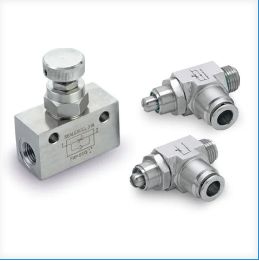
- Setting Cylinder Speed with Flow Controls: A flow control valve on the exhaust side lets a fitter slow the rod so it stops banging into the end of its stroke. For a quicker return, a quick exhaust valve dumps the air close to the cylinder. Seals seem to last longer once the speeds are set properly, in most cases.
Sizing the Circuit for the Machine’s Cycle
- Sizing the Circuit for the Cycle Count: A packaging machine could run one cylinder 40 times a minute, two shifts a day. Engineers sizing a circuit like that want the flow capacity and pressure rating of every valve and fitting on it. The best pneumatic product manufacturer will normally have those figures on hand and share them without much fuss.
- What a Good Datasheet Should Tell a Buyer: Working pressure and temperature range should be on there, along with the material and the thread type. A food plant with washdown areas would probably lean toward 316 stainless steel over brass. A vague datasheet is a warning sign, because guessing at a rating on a production machine gets expensive.
Planning the Next Machine with Fewer Surprises
Most plants go through their pneumatic parts once a year, which is usually when worn fittings and undersized valves turn up. A new machine is a better time to sort that out. Engineers can send over bore sizes, tube sizes and cycle rates. Get in touch with the sales team to talk through fittings and valves for the job.