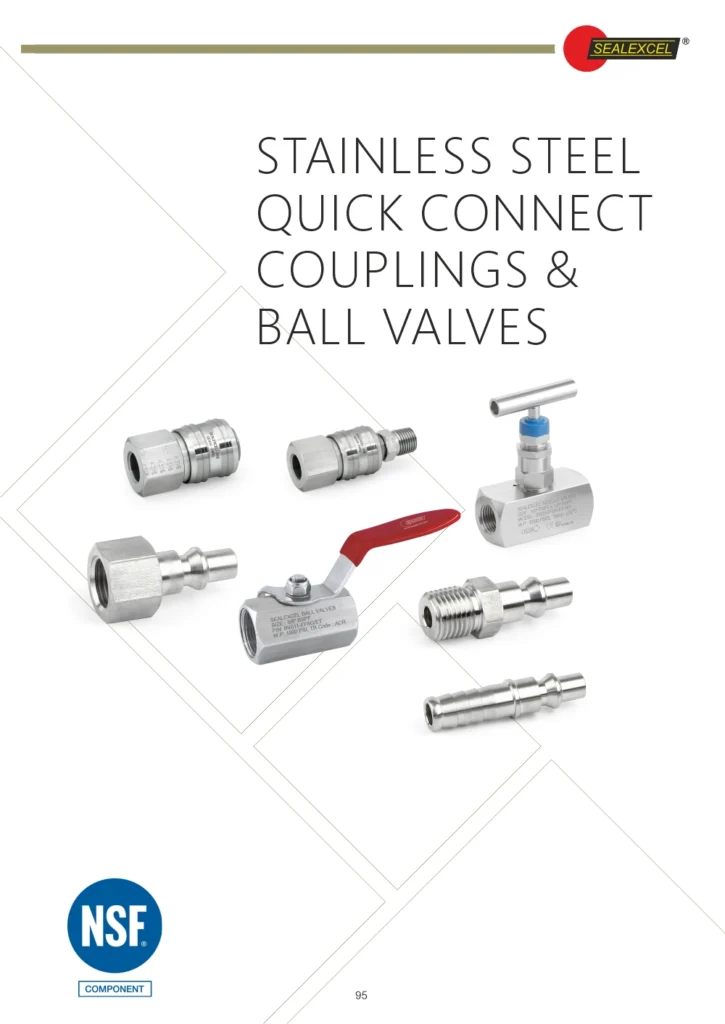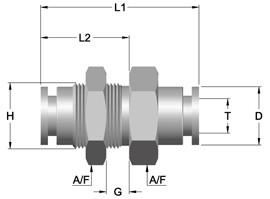


The best pneumatic product manufacturer supplies the valves, fittings and couplings that keep automated lines moving. Sound components mean tighter control, less wasted air and machinery that holds its performance shift after shift.
Key Takeaways
- The best pneumatic product manufacturer engineers parts for precise, repeatable air control.
- Quality valves and fittings cut leakage and unplanned downtime.
- Material grade and pressure rating set how long components last.
- In-house testing proves integrity before parts ever reach a plant.
- Better sourcing protects output, energy spend and equipment life.
Automated production leans hard on compressed air. Robots, actuators, clamps and indexing tables all wait on a valve to switch or a cylinder to extend at the exact right moment. When the air kit behind that motion is sound, lines run clean and predictable. The best pneumatic product manufacturer builds parts that hold timing, pressure and seal across millions of cycles.
A line is only as steady as the weakest joint feeding it. The best pneumatic product manufacturer treats valves, fittings and couplings as one connected system rather than a box of loose parts. Vibration, moisture and pressure swings test every connection daily. Precision-made components keep actuators sharp, response times short and air losses low through long, uninterrupted production runs.
What Automation Quietly Demands From Every Component
- Speed That Stays Repeatable: Automated cells run on timing. A valve that shifts a few milliseconds late on Monday and on time by Friday throws off a whole sequence. Good makers hold tight tolerances so each actuator answers the same way, cycle after cycle, letting controllers trust the motion they command without constant tweaking.
- Materials Matched To The Duty: Compressed air carries moisture, oil mist and the odd slug of condensate that wears soft metal from the inside. Brass handles general factory service, while 316 and 316L stainless steel suit washdown, food lines and damp coastal sites. The wrong grade looks fine for weeks, then shows as pitting, sticking and early failure.
Where Weak Pneumatics Bleed Money
- Air Leaks That Never Get Logged: A small leak rarely raises an alarm. It just hisses quietly while the compressor works harder to hold system pressure. Across a busy plant, dozens of loose, low-grade fittings push the energy bill up with nobody pinning down the cause. Tight, well-made connections stop that drain at source.
- Stoppages That Wreck The Schedule: When a fitting splits mid-shift, the real cost is the idle line behind it, not the part itself. Crews lose hours, orders slip and the same weak joints come back to haunt the next run. Dependable components, made to consistent batches, break that cycle and keep production planning honest.
- Warning Signs Buyers Should Read Early: Shaky sourcing shows itself well before parts hit the line. A short list of tells separates a maker worth trusting from a costly gamble, and procurement teams who learn them sidestep nasty surprises during commissioning and through the first hard months when a new line is still finding its rhythm.
- No published pressure ratings or cycle figures on the core products.
- Material claims with no grade stated and no test certificate behind them.
- Threads and bores that drift from batch to batch.
- A quick visual check at dispatch, with no real leak or burst testing.
- Lead times that slip the moment order volume rises.
Specifications That Separate Serious Makers
- Numbers Printed, Not Promised: A maker worth its salt prints working pressure, burst pressure and temperature range against each line. A double ferrule fitting in 316 stainless can sit comfortably above system pressure with a broad thermal window. Hard figures let an engineer size and specify with confidence rather than guess on installation day.
- Testing Done Under One Roof: The stronger suppliers test in their own works instead of trusting the foundry alone. Helium leak detection finds tiny escape paths a gauge skips, while hydrostatic checks push parts past their rated load. Components that clear both reach site ready to perform, not waiting to fail under first pressure.
Building Lines That Keep Their Promise
Automated plants reward careful component choices and punish shortcuts slowly, through leaks, stoppages and a creeping energy bill. Parts with stated ratings, the right material grade and genuine in-house testing keep cycles tight and output steady. Engineers and buyers ready to lift line reliability can request full specifications and technical support from a trusted manufacturer today.