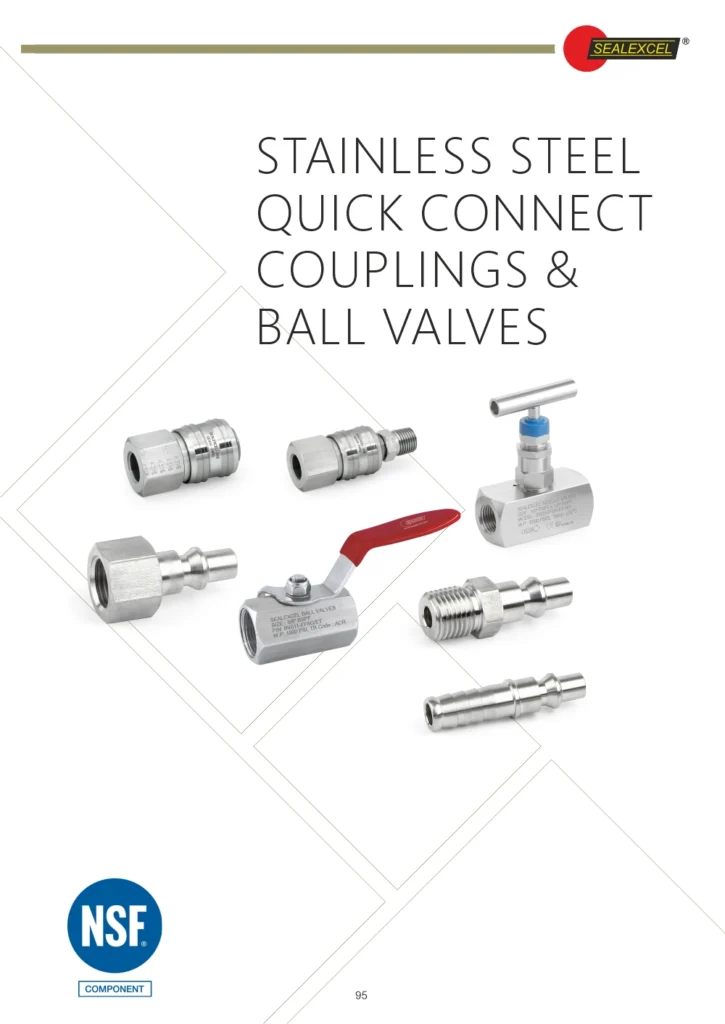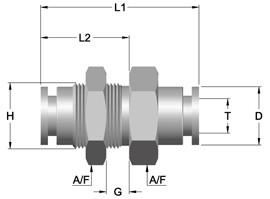


Oil, gas, chemical and power plants stake uptime on grade 316 pipework joints. Here is what separates capable stainless steel pipe fittings manufacturers in India from the rest, from burst testing to thread accuracy.
Key Takeaways
- A 316 body shrugs off chlorides that eat carbon steel alive.
- Burst and helium leak records matter more than catalogue claims.
- Good stainless steel pipe fittings manufacturers in India cut NPT and BSP threads on calibrated machines.
- Elbows, tees and plugs each earn a different spot on the line.
- Mill certificates trace every batch back to its melt.
Crude comes off the well hot, sour and abrasive. Steam lines in a power station sit above 100 bar, close to 1450 psi, for years without rest. No plant survives on strong pipe alone. The joints carry the real load, and buyers who vet stainless steel pipe fittings manufacturers in India find suppliers whose connections hold through every shift.
Sourcing has shifted. Procurement teams on petrochemical and power projects keep coming back to stainless steel pipe fittings manufacturers in India that machine grade 316 bodies with full mill traceability behind each batch. The certificate runs back to the melt itself, ready for any auditor. A cheap copy from a grey market catalogue offers no such cover.
Material, Pressure and Precision Decide Fitting Survival
- Material Selection under Real Operating Stress: Grade matters more than any other line on the datasheet. Carbon steel rusts fast once chlorides or sulphur get involved. Give the same duty to 316, or its low carbon cousin 316L, and the surface holds its passive film through years of attack. Ask any plant that ran seawater cooling through the wrong alloy.
- Pressure Ratings Proven under Test: Numbers printed in a catalogue mean little without evidence behind them. Serious producers put fittings through hydrostatic burst testing far beyond nameplate duty. Helium leak detection then confirms integrity for deep vacuum service where the smallest path lets contamination creep in. Pressure figures should always appear in both bar and psi on the datasheet.
- Thread Form and Machining Precision: NPT and BSP threads only seal when cut to tight tolerances on calibrated equipment. A thread gauge tells part of the story. Surface finish on the sealing face tells the rest. Producers with CAD driven design and in house machining hold these details consistent across production batches, and that consistency is what repeat buyers pay for.
Elbows, Tees, Couplings and the Craft of Routing Flow
- Turning Flow without Starving It: Elbows change direction through 45 or 90 degrees while keeping the bore open, so pumps do not fight needless head loss. Threaded street elbows save space inside cramped instrument skids. Machined bodies in grade 316 shrug off the vibration that works lesser castings loose. Choose the wrong geometry and pressure drop quietly inflates the energy bill.
- Branching, Joining and Closing Lines Off: Tees split flow to instruments or parallel process trains. Couplings join two threaded pipe ends where welding is impractical or forbidden by the permit system. Adapters bridge NPT to BSP where equipment from different regions meets on one skid. Plugs blank off spare ports until the next expansion needs them.
- Match the fitting grade to the most corrosive medium in the system, not the average one.
- Check burst test and helium leak records before approving any supplier.
- Confirm one thread standard across the whole line. Mixed NPT and BSP joints leak.
- Ask for material traceability back to the mill certificate.
- Keep a small reserve of plugs and couplings for shutdown work.
Grade 316 Earns Its Keep in Sensitive Systems
- Corrosion Resistance for High Purity Duty: A fab or a sterile filling suite has no tolerance for metal ions drifting into product. None. Grade 316 keeps its protective surface intact through caustic washdowns and chloride heavy utility water, right where cheaper grades give way. One pitted joint upstream of a batch reactor can write off a full production run.
- Manufacturing Depth behind the Part Number: The strongest stainless steel pipe fittings manufacturers in India design, machine and test under one roof, with ISO 9001:2015 systems governing every stage. That depth shows in dimensional consistency from the first piece to the ten thousandth. Buyers who audit the shop floor before ordering rarely regret the time spent.
Pipework That Outlasts the Plant It Serves
Every refinery turnaround and power station outage exposes the joints that were specified carelessly years earlier. Grade 316 fittings machined to proper tolerances and proven under test cost a little more upfront and repay it for decades. Share your line sizes, pressures and media with a technical sales team and get a quotation matched to the application.